

Across Massachusetts, Amazon, FedEx, and UPS delivery vehicles regularly navigate residential streets, busy intersections, and crowded parking areas. When one of these vehicles is involved in an accident, determining responsibility can be more complicated than in a typical car crash.
Delivery fleet accidents may require examining who employed the driver, who operated the vehicle, and what company records reveal about the collision.
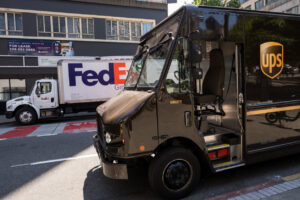

Why Can Delivery Vehicle Accidents Be Particularly Dangerous?
Delivery drivers frequently navigate narrow streets, residential driveways, and areas with limited parking. Their routes involve repeated stops and backing maneuvers, while larger trucks and vans have significant blind spots and need more room to maneuver.
Collisions may involve distracted driving, failure to yield, unsafe backing, or speeding. When larger commercial vehicles are involved, the consequences for motorists, cyclists, and pedestrians can be particularly serious.
Who Is Responsible When an Amazon, FedEx, or UPS Driver Causes an Accident?
The company logo displayed on a delivery vehicle does not necessarily identify the driver’s legal employer. This distinction is important because major delivery fleets operate under different business structures, which can affect who may be held responsible following an accident.
- UPS: Many UPS package delivery drivers are direct employees of the company.
- FedEx: FedEx contracts with independent service-provider businesses that employ drivers and operate delivery routes.
- Amazon: Some drivers work for independent Delivery Service Partners (DSPs), while Amazon Flex uses independent contractors who may deliver in personal vehicles.
Under Massachusetts law, an employer may be held responsible for an employee’s negligence when the employee is acting within the scope of their employment. This is known as vicarious liability. However, when a delivery driver works for an independent contractor, determining responsibility may be more complicated, as liability may extend beyond the driver to the delivery contractor or another company involved in the operation.
Examining the relationships between these parties, including who controlled the driver’s work, owned or maintained the vehicle, and was responsible for hiring and supervision, may be necessary to determine who can be held legally responsible.
What Compensation May Be Available After a Delivery Truck Crash?
Delivery vehicle accidents can cause serious injuries, including fractures, traumatic brain injuries, spinal cord injuries, and permanent disabilities.
When negligence causes an accident, injured individuals may be entitled to compensation for:
- Medical expenses: Emergency treatment, rehabilitation, and future medical care.
- Lost income: Wages lost during recovery and diminished future earning capacity.
- Pain and suffering: Physical pain, emotional distress, and the impact on daily life.
- Long-term care: Ongoing assistance, adaptive equipment, and other needs resulting from serious injuries.
Massachusetts operates under a no-fault automobile insurance system. Personal Injury Protection (PIP) may cover certain medical expenses and lost wages regardless of fault, subject to eligibility and policy limits.
Under M.G.L. c. 231, § 6D, recovering pain and suffering damages generally requires more than $2,000 in qualifying medical expenses, with exceptions for certain serious injuries.
Delivery fleet claims may involve commercial automobile insurance, contractor policies, or other applicable coverage. Additionally, under Massachusetts comparative negligence law, compensation may be reduced by an injured person’s percentage of fault and barred if that fault exceeds the combined negligence of the parties against whom recovery is sought.
What Should You Do After a Collision with a Delivery Vehicle?
Seek medical attention and contact law enforcement when appropriate. If safe, photograph the vehicles, roadway, company markings, and license plates, and obtain witness information. Notify your insurer and retain medical and accident-related records.
Under Massachusetts law (M.G.L. c. 90, § 26), drivers involved in an accident resulting in injury, death, or more than $1,000 in damage to any one vehicle or other property must generally file a written crash report with the Registry of Motor Vehicles within five days and provide a copy to the police department with jurisdiction over the accident. Exceptions apply when a driver is physically incapable of filing.
Massachusetts also has a three-year statute of limitations for most personal injury lawsuits under M.G.L. c. 260, § 2A. This generally means an injured person has three years from the date of the accident to file a lawsuit, although exceptions may apply. Because important evidence can be lost or overwritten, taking action well before this deadline can be critical.
Investigating Serious Delivery Vehicle Accidents
Accidents involving major delivery fleets can raise complex questions about liability and insurance coverage. Identifying the responsible parties and preserving relevant evidence are important steps in evaluating a claim.
SUGARMAN has decades of experience representing individuals injured in motor vehicle accidents, including collisions involving commercial trucks. If you would like to speak to an attorney about an accident involving a delivery vehicle, call 617-542-1000, email , or fill out our contact form.